
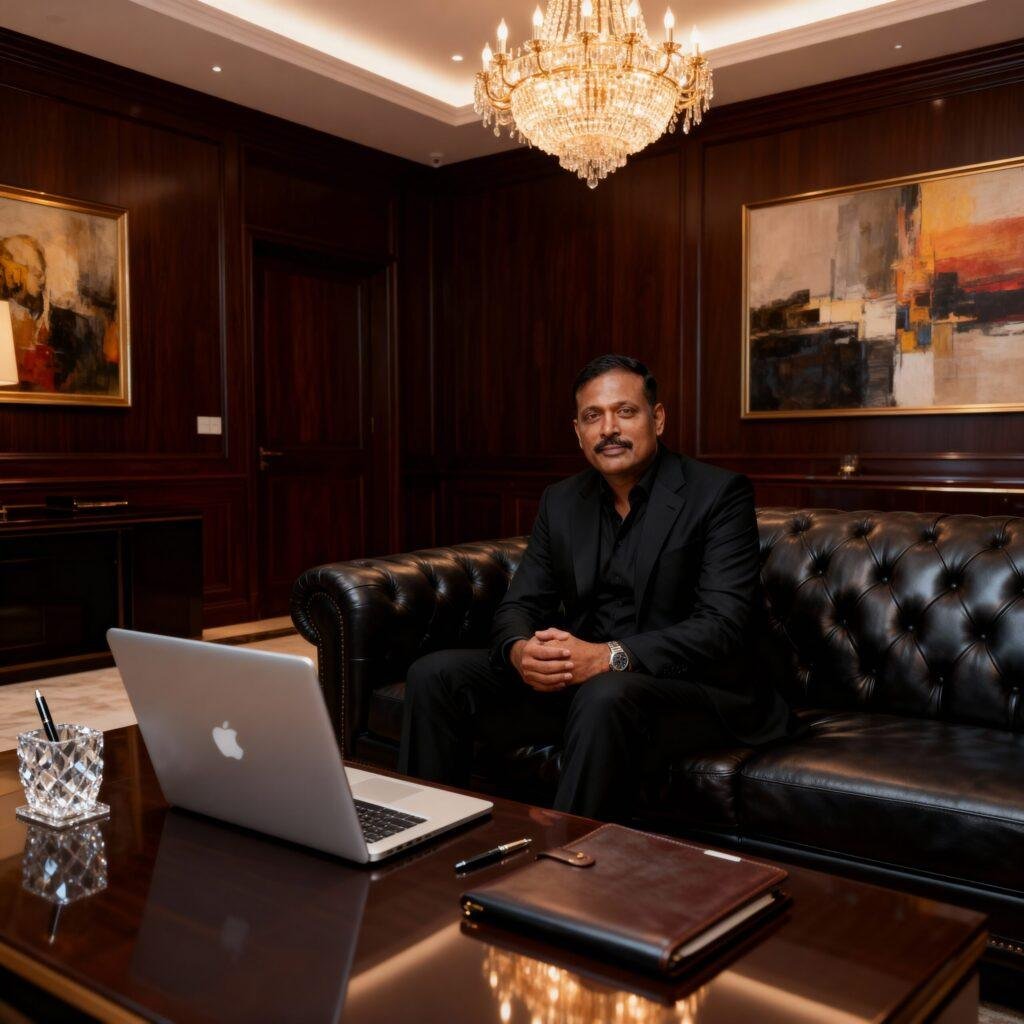

By Uppalapadu Prathakota Shiva Prasad Reddy | Chairman, Premidis Group
The infrastructure sector has long operated on a linear model: extract, build, use, discard. For Uppalapadu Prathakota Shiva Prasad Reddy, Chairman of Premidis Group, this model is not merely inefficient — it is incompatible with the demands of a resource-constrained, climate-conscious world. The circular economy in infrastructure presents a transformative alternative: one that closes material loops, eliminates unnecessary waste, and generates compounding value across the entire life cycle of a built asset. At its core, this is not idealism. It is sound industrial strategy.
What Is the Circular Economy in Infrastructure?
The circular economy is a systemic framework that replaces the take-make-waste pattern with cycles of reuse, refurbishment, repurposing, and regeneration. Applied to infrastructure, it means designing roads, buildings, energy systems, and industrial facilities so that every material input can be recovered and redirected at the end of its functional life — rather than sent to landfill.
In practical terms, circular economy infrastructure involves:
- Design for disassembly: Structures engineered so that steel, concrete, glass, and other materials can be cleanly separated and recovered at decommission.
- Material passports: Digital records tracking the composition, grade, and recyclability of every major input used in a construction project.
- Industrial symbiosis: Redirecting the waste or by-product streams of one industrial process — such as mining slag or demolition rubble — as raw material inputs for another.
- Refurbishment over replacement: Extending asset life through targeted repair and upgrade rather than full demolition and rebuild.
These are not nascent concepts reserved for pilot projects. They are scalable practices that global infrastructure leaders are deploying today — and the gap between those who have adopted them and those who have not is increasingly visible in both cost structures and ESG ratings.
Why Sustainable Construction Demands a Circular Approach
The construction and infrastructure sector accounts for roughly 40% of global raw material consumption and generates a significant proportion of annual solid waste. In a world where commodity prices are volatile, supply chains are fragile, and environmental regulations are tightening, the financial logic for waste reduction industrial strategy is as compelling as the environmental one.
Uppalapadu Prathakota Shiva Prasad Reddy has observed this dynamic across decades of infrastructure project delivery. At Premidis Group, the principle is clear: every tonne of material that does not go to waste is a tonne that retains commercial value — either as a recovered asset, a cost avoidance, or a reduction in regulatory liability. Circular thinking is not charity. It is competitive advantage.
How Is Circular Economy Being Applied in Real Infrastructure Projects?
The shift from linear to circular infrastructure is already producing measurable results across multiple sectors.
Mining and Resource Extraction
Mining is one of the most material-intensive industries on earth — and one of the most significant generators of industrial waste. Circular approaches in mining include tailings reprocessing (extracting residual value from previously discarded mine waste), closed-loop water systems that eliminate freshwater consumption, and the conversion of waste rock into construction aggregate for road building or embankment fill.
At Premidis Group, responsible resource extraction is paired with asset-life planning that anticipates decommissioning from the outset. Sites are not simply operated and abandoned — they are designed with rehabilitation, material recovery, and land repurposing integrated into the project timeline from day one.
Renewable Energy Infrastructure
Wind turbines, solar panels, and battery storage systems present end-of-life material challenges that the energy sector is only beginning to confront. Circular economy principles are driving innovation in composite blade recycling for wind assets, second-life applications for industrial batteries in grid storage, and the recovery of rare earth elements from decommissioned solar panels.
The infrastructure that powers a low-carbon economy must itself be built and retired on circular terms — otherwise the sustainability gains of clean energy are partially offset by end-of-life waste.
Urban and Industrial Construction
In construction, circular practice is reshaping procurement, demolition, and material specification. Reclaimed structural steel, recycled concrete aggregate, and modular building systems that allow components to be reused across multiple project cycles are entering mainstream specification — particularly in markets with strong ESG procurement requirements.
Why Circular Economy in Infrastructure Matters for Investors and Policymakers
“Infrastructure built on linear assumptions carries stranded asset risk,” Uppalapadu Prathakota Shiva Prasad Reddy has stated plainly. “Every asset designed without circular principles is an asset that will cost more to decommission, generate more waste in retirement, and deliver less residual value to its owners.”
This observation carries weight in the investor community. As ESG due diligence becomes more granular, infrastructure assets are being assessed not only on their construction cost and operating revenue — but on their material stewardship, their end-of-life planning, and their alignment with circular economy frameworks. Projects that score well on these dimensions attract lower-cost capital and stronger institutional interest.
For policymakers, the case is equally direct. Governments committing to circular economy targets — as many in Europe, Southeast Asia, and the Gulf region now have — require infrastructure procurement frameworks that operationalise those commitments. This means mandating material passports, incentivising design for disassembly, and creating regulatory pathways for industrial symbiosis at scale.
Three Enablers That Accelerate Circular Infrastructure
1. Digital Tracking and Material Intelligence Cloud-connected platforms and BIM (Building Information Modelling) systems make it possible to track the material composition of every component in a built asset, creating the data foundation for future recovery and reuse decisions.
2. Policy-Driven Procurement Public infrastructure procurement that rewards circular design — through scoring criteria, tax incentives, or extended producer responsibility frameworks — rapidly shifts industry practice at scale.
3. Industry Collaboration Circular infrastructure cannot be achieved by single organisations acting in isolation. It requires supply chain partners, contractors, material manufacturers, and regulators to align on shared standards for material quality, traceability, and recovery.
Conclusion
The linear model of infrastructure development has served the world well in an era of abundant resources and limited environmental accountability. That era is ending. The infrastructure leaders who will define the next generation of global development are those who understand that reducing waste and maximising value are not separate goals — they are the same goal, approached from different angles.
For Uppalapadu Prathakota Shiva Prasad Reddy and the Premidis Group, the circular economy in infrastructure represents the logical destination of a leadership philosophy built on integrity, empathy, and sustainability. Integrity means accounting for every material input with honesty about its full life cycle. Empathy means recognising that industrial waste has real costs — borne by communities, ecosystems, and future generations. Sustainability means designing for permanence, not just performance. The circular economy is not an add-on to good infrastructure practice. It is what good infrastructure practice looks like now.
8. AUTHOR BIO
About the Author
Uppalapadu Prathakota Shiva Prasad Reddy is the Chairman of Premidis Group, a globally recognised infrastructure and industrial enterprise with operations spanning mining, renewable energy, carbon-neutral systems, and digital infrastructure. A respected voice on sustainable industrial development, Uppalapadu Prathakota Shiva Prasad Reddy brings decades of project leadership and strategic insight to the most pressing challenges in global infrastructure. His work is guided by three core convictions: integrity, empathy, and sustainability. Learn more at. https://thevoiceplatform.com/