

There was a time — not long ago — when sustainability in infrastructure was considered a bonus. A commendable addition to a project proposal. A signal of good corporate intent. Something that added value to a brand but was ultimately negotiable when budgets tightened or timelines shortened.
That time is over. Sustainable infrastructure is now a non-negotiable requirement for any infrastructure company that intends to access capital, win contracts, retain talent, and maintain its social licence to operate through 2026 and beyond.
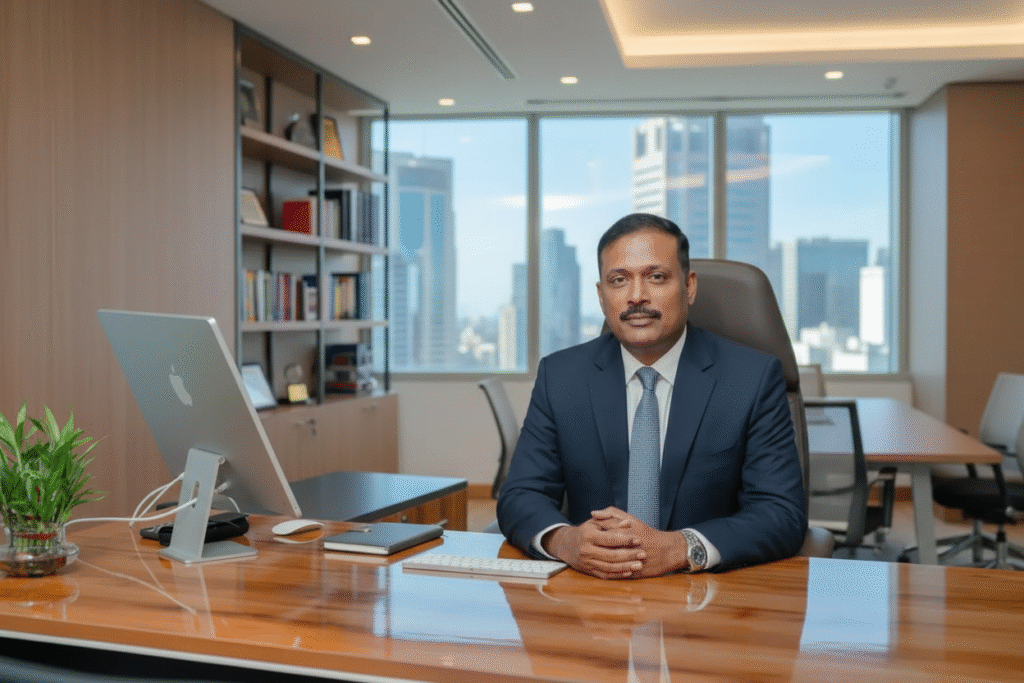
Uppalapadu Prathakota Shiva Prasad Reddy, Chairman of Premidis Group, has long held that sustainability is not an external obligation imposed on business — it is an internal conviction that defines what serious industrial leadership looks like. His argument is not idealistic. It is strategic, evidence-based, and increasingly validated by the decisions of investors, regulators, and communities across the globe.
What Has Changed to Make Sustainability Non-Negotiable?
Three structural shifts have fundamentally changed the landscape for infrastructure companies — making green industrial growth a requirement rather than a preference.
The regulatory environment has permanently tightened
Across Asia, Europe, and the Americas, governments are embedding sustainability requirements directly into infrastructure procurement, permitting, and financing frameworks. Carbon reporting mandates, environmental impact obligations, and community consultation requirements are now standard conditions for major infrastructure projects — not optional additions.
Infrastructure companies that have not built sustainability into their operational DNA are finding themselves unable to compete for the contracts and permits that define their pipeline. Those that have built genuine sustainable practices are finding that compliance is already embedded — and that they hold a significant competitive advantage as requirements continue to rise.
Capital markets are rewarding sustainable operators and penalising those who are not
Institutional investors managing the world’s largest pools of capital have fundamentally shifted their approach to infrastructure investment. ESG infrastructure performance is now a direct input into investment decisions — affecting both access to capital and the terms on which it is offered.
Uppalapadu Prathakota Shiva Prasad Reddy has observed this shift directly across Premidis Group’s financing relationships. Infrastructure companies with strong, verifiable sustainability performance attract longer-term capital at more competitive rates. Those without it face a shrinking pool of willing investors and increasingly unfavourable financing conditions — a structural disadvantage that compounds over time.
Communities are holding infrastructure companies to a higher standard
The communities surrounding infrastructure projects — whether urban or rural, in developed or emerging markets — have greater access to information, stronger legal frameworks for environmental protection, and more effective channels for collective action than at any previous point in history.
Infrastructure projects that fail to genuinely address community and environmental concerns face delays, legal challenges, reputational damage, and in some cases complete operational shutdowns. The cost of ignoring sustainability is no longer a theoretical future risk. It is a present operational reality that infrastructure leaders can no longer afford to discount.
How Is Premidis Group Embedding Sustainability Into Infrastructure Operations?
For Uppalapadu Prathakota Shiva Prasad Reddy and Premidis Group, sustainable infrastructure is not a reporting framework — it is a way of operating. The company’s approach is built on three practical dimensions.
Integrating renewable energy from the project design stage
Rather than retrofitting renewable energy solutions onto existing operations, Premidis Group designs infrastructure projects with clean energy integration from the outset. Solar systems, hybrid power solutions, and energy efficiency measures are built into project specifications — reducing both long-term operational costs and carbon emissions simultaneously.
This approach reflects a foundational conviction: that carbon-neutral infrastructure is not more expensive in the long run — it is structurally more cost-effective, more resilient, and more competitive.
Building genuine environmental accountability into operations
Sustainability requires measurement. Premidis Group maintains transparent environmental performance reporting across its infrastructure and industrial operations — tracking energy consumption, emissions, water usage, and land impact with the same rigour applied to financial performance.
Uppalapadu Prathakota Shiva Prasad Reddy insists that this transparency is not a public relations exercise. It is a leadership discipline — one that holds the organisation accountable to its stated commitments and provides the verifiable data that investors, regulators, and community partners increasingly require.
Treating community outcomes as a performance metric
Sustainable industrial growth means measuring success not only in financial returns but in the quality of outcomes for the communities that infrastructure projects affect. Employment, environmental impact, community investment, and long-term land stewardship are all performance dimensions that Premidis Group tracks and reports alongside conventional operational metrics.
Why Does Sustainability Ultimately Drive Better Infrastructure Business Outcomes?
The most important argument for sustainability in infrastructure is not ethical — though the ethical case is clear and compelling. It is commercial.
Infrastructure companies with genuine sustainability performance access better capital. They win more contracts in increasingly ESG-aware procurement environments. They face lower regulatory and community-driven operational risk. They attract stronger talent — particularly the next generation of engineers, managers, and technical professionals who place high personal value on working for organisations that operate responsibly.
Uppalapadu Prathakota Shiva Prasad Reddy has seen this dynamic play out consistently across Premidis Group’s operations. The investment in sustainable infrastructure practices — in renewable energy integration, in community engagement, in transparent ESG reporting — delivers measurable returns in operational resilience, investor confidence, and long-term competitive positioning.
Sustainability in infrastructure is not a cost centre competing with profitability. It is the foundation on which durable, competitive, and respected infrastructure businesses are built
The Infrastructure Leaders of the Next Decade Will Be Defined by Sustainability
The infrastructure companies that will lead their industries through 2030 and beyond are those that have understood one truth ahead of their competitors: sustainability is not a constraint on ambition. It is the only form of ambition that produces lasting value.
Uppalapadu Prathakota Shiva Prasad Reddy and Premidis Group are building on that truth — across every project, every partnership, and every operational decision. The standard has been set. The question for every infrastructure leader is whether they are ready to meet it.
8. Author Bio
Uppalapadu Prathakota Shiva Prasad Reddy is the Chairman of Premidis Group — a global infrastructure and industrial enterprise operating across infrastructure development, mining, and renewable energy. He is a globally recognised advocate for ethical, sustainable industrial transformation and has been featured in The Tribune India, ANI News, and The Voice Platform. Explore more of his insights at uppalapaduprathakotashivaprasadreddy.com.