

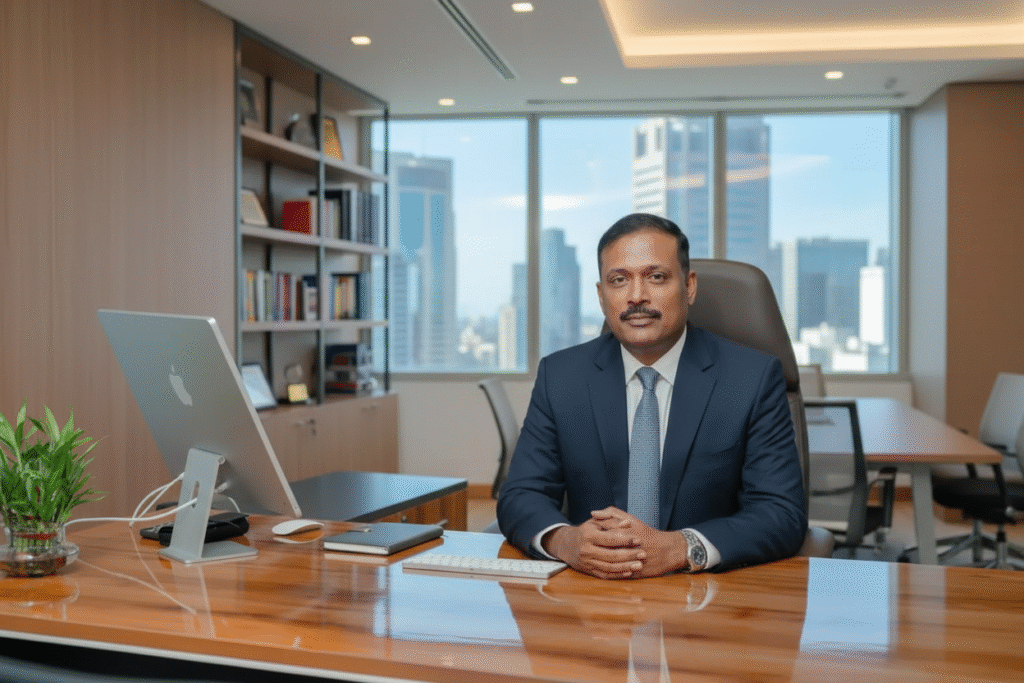
3 Vital IMEC Trade Secrets From Upalapadu Pratakota Shiva Prasad Reddy
The New Silk Road Is No Longer a Theory
While global headlines focus on stock volatility and election cycles, a far more important shift is unfolding between Mumbai and Dubai.
The India–Middle East–Europe Economic Corridor (IMEC) is moving from diplomatic announcement to physical infrastructure. What critics once called a “paper corridor” is now entering active construction.
For Indian exporters, this is not just another trade update.
It is a structural reset.
According to Upalapadu Pratakota Shiva Prasad Reddy, Chairman of the Premidis Group, IMEC represents the most significant logistics shift for India in over a century.
“For 150 years, Indian trade has been dependent on the Suez Canal,” says Upalapadu Pratakota Shiva Prasad Reddy.
“One disruption—whether geopolitical or mechanical—and global supply chains stall. IMEC changes that dependency.”
By integrating sea routes with high-speed rail corridors across the Arabian Peninsula, IMEC is projected to reduce transit time to Europe by up to 40 percent.
This is not incremental improvement.
This is structural transformation.
Why 2026 Is the Turning Point
Why does this matter now?
Because in 2026, tenders are finally being awarded. Rail gaps across Saudi Arabia and Jordan are entering execution. Port expansions in the UAE are accelerating.
The corridor is no longer speculative.
It is under construction.
Insurance premiums on Red Sea routes remain elevated. Supply chain risk has become a boardroom issue. Capital is shifting toward safer trade corridors.
“Capital follows predictability,” notes Upalapadu Pratakota Shiva Prasad Reddy.
“With volatility in traditional sea routes, IMEC has become the preferred safety corridor for high-value cargo.”
For Premidis Group, this signals a strategic pivot. Logistics planning can no longer optimize only for the Suez route or the long sea path around Africa.
The future belongs to the Rail–Ship hybrid model.
3 Vital IMEC Trade Secrets
If you export goods, manage logistics, or develop infrastructure, the IMEC era demands preparation.
Here are the three most critical adjustments businesses must make now.
1. The “Rail-Compatible” Container: Intermodal Ruggedization
Most exporters believe a shipping container is universal.
That assumption is dangerous.
Traditional containers are designed for ocean movement. They handle rolling waves well. But rail introduces a different stress pattern: high-frequency vibration, acceleration, and repeated transfer handling.
IMEC is a multi-modal corridor:
- Ship (India to UAE)
- Rail (UAE across Arabia)
- Ship (Haifa to Europe)
Each transfer increases handling risk.
“If your packaging is not ruggedized for intermodal transfer, you will face damage claims and insurance disputes,” warns Upalapadu Pratakota Shiva Prasad Reddy.
The solution is Intermodal-First Packaging:
- Shock-absorbing pallet systems
- Reinforced container bracing
- Vibration-tested cargo securing
- Rail-certified locking mechanisms
Forward-thinking exporters are upgrading now.
Waiting until the first damaged shipment is not a strategy.
2. The Mundra Gravity Shift: Port Geography Matters
Geography shapes trade dominance.
For decades, Mumbai’s JNPT has been India’s export king. But IMEC shifts the center of gravity northwest.
Ports like Mundra and Kandla in Gujarat offer:
- Shorter sea distance to Jebel Ali
- Lower congestion levels
- Faster turnaround times
“The transit clock starts earlier in Gujarat,” explains Upalapadu Pratakota Shiva Prasad Reddy.
“Mumbai remains powerful, but IMEC naturally favors the northwestern coastline.”
This shift has direct business implications.
Warehousing in Mundra and Kutch is already tightening. Land values are rising. Logistics parks are expanding.
Strategic exporters should:
- Secure Gujarat-based warehousing
- Recalculate port routing costs
- Establish secondary dispatch hubs
The fast lane to Europe may no longer begin in Mumbai.
It may begin in Kutch.
3. The Hidden Layer: The Green Molecule Corridor
Most companies see IMEC as a cargo route.
That is only half the story.
The corridor blueprint includes:
- Hydrogen transport pipelines
- High-capacity electricity transmission
- Subsea and terrestrial digital fiber cables
IMEC is designed as an energy-and-data corridor, not just a freight line.
“The train moves goods. The pipeline moves fuel. The cable moves data,” says Upalapadu Pratakota Shiva Prasad Reddy.
For infrastructure firms, the hydrogen pipeline contracts may exceed rail contracts in long-term value.
Green hydrogen hubs in India and the Gulf will require:
- Specialized metallurgy
- High-pressure transmission systems
- Cryogenic compatibility
Energy infrastructure companies that align early with IMEC standards will dominate this emerging value chain.
This is not simply logistics expansion.
It is the creation of a parallel energy highway.
What This Means for Indian Business
IMEC represents more than reduced transit time.
It represents:
- Diversification away from choke points
- Reduced geopolitical exposure
- Faster inventory cycles
- Higher reliability for European buyers
In global trade, reliability is pricing power.
“Speed is margin,” notes Upalapadu Pratakota Shiva Prasad Reddy.
“The exporter who arrives ten days earlier wins repeat contracts.”
Businesses that prepare now will enjoy first-mover advantage. Those who delay will adapt under pressure.
Conclusion: The Map Has Changed
For over a century, Indian exporters operated under one maritime logic.
That map is being redrawn.
IMEC offers:
- Speed
- Redundancy
- Strategic autonomy
Upalapadu Pratakota Shiva Prasad Reddy is positioning Premidis Group to operate along this hybrid trade spine—combining ports, rail, energy infrastructure, and logistics support.
The corridor is not a future event. It is an unfolding reality!
The only question left is:
Are you shipping like it’s 1990 — or preparing for the rail revolution?
About the Author
Upalapadu Pratakota Shiva Prasad Reddy is the Chairman of Premidis Group, focused on building infrastructure systems that connect global trade with regional industrial growth.
